
If a radiator is not heating up properly, it is usually a sign of a simple issue rather than a complete system failure. With a few safe checks, you can often narrow down the cause and know whether it is something you can handle or a job for a heating engineer.
Start with safe checks on any cold radiator
Before looking at specific symptoms, it is worth running through a couple of basic checks. These can solve the problem in minutes and will help any engineer if you do need to call one.
First, make sure the heating is actually on and the room thermostat is turned up. It sounds obvious, but it is a common oversight, especially with programmable controls and smart thermostats.
Check both radiator valves are fully open (turn anti-clockwise to open)
Note any odd noises such as gurgling or banging
Look for damp patches, rust stains or any sign of leaks
Check boiler pressure if you have a combi or system boiler
If you spot leaks, heavy corrosion or the need to keep topping up the boiler pressure, stop there and contact an engineer. Continually adding water can damage your boiler and pipework.
Radiator hot at the bottom, cold at the top
Hot at the bottom but cold or cool at the top usually points to trapped air. The hot water cannot reach the top of the radiator, so you get uneven heating and sometimes gurgling noises.
Bleeding the radiator is often all that is needed, but it must be done carefully and with the heating off so you do not let in more air or scald yourself.
How to bleed a radiator safely
Turn off the heating and give the radiator time to cool. Place an old towel under the bleed valve and hold a small container or cloth under the opening to protect walls and floors.
Insert the radiator key into the bleed valve at the top corner and turn it slowly anti-clockwise. You will hear air hissing out. As soon as water starts to flow in a steady stream, close the valve firmly but gently.
After bleeding one or more radiators, check your boiler pressure gauge. If the pressure has dropped below the recommended range (usually shown in green on the gauge), follow your boiler manual to top it up once. If it keeps dropping or you need to repressurise regularly, that is a clear sign to call an engineer.
Radiator cold at the bottom, warm at the top
If the top is hot but the bottom stays cold, the issue is often sludge or poor circulation. Over time, rust and debris build up in the system and settle in the bottom of radiators, blocking the flow of hot water.
You might also notice dark, dirty water when you bleed the radiator. This is another clue that there is sludge in the system.
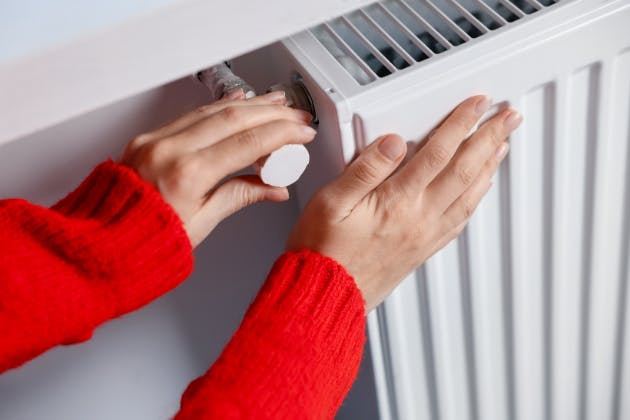
Homeowners can gently feel the radiator surface from top to bottom when it is warm (not scalding) to check for cold patches. Unfortunately, clearing sludge properly usually needs professional equipment such as a power flush and chemical treatment, so it is best handled by a heating engineer.
Only one radiator not heating up
When just one radiator is cold and the rest are working normally, the problem is often local to that radiator. Common culprits include stuck TRVs, closed lockshield valves or an airlock on that specific run of pipework.
Checks you can do on a single cold radiator
First, check the thermostatic radiator valve (TRV) is set high enough and not stuck. Turn it fully on, then off, then on again to see if you feel any change in the pipe warmth after the heating has been on for a while.
On the opposite side, the lockshield valve controls how much water flows through that radiator. It is usually capped and adjusted with a small spanner. Confirm it is open by carefully turning it a quarter turn anti-clockwise. Avoid making large adjustments on multiple radiators as this affects system balancing.
If the TRV head is loose, damaged or clearly not responding, it may need replacement. Stuck pins inside TRVs can sometimes be freed by a professional, but attempting to pull or tap them yourself risks leaks. If you are unsure, stop and arrange a visit from a heating engineer.
Several radiators cold or only lukewarm
When multiple radiators are not heating properly, you are more likely dealing with a system issue rather than a single faulty valve. It could be low boiler pressure, a circulation pump problem, an airlock or a boiler fault.
Check your boiler display for fault codes or flashing lights. Refer to the boiler manual to identify what the code means. Do not attempt to remove boiler covers or work on any gas components yourself.
If pressure is low, top it up once following the manual
If a fault code remains after a reset, contact an engineer
If radiators are only warm at the top or nearest the boiler, circulation may be weak
A failing pump, severe sludge or internal boiler issues all require professional diagnosis. This is the point to book a boiler repair or heating visit rather than keep experimenting.
Radiators heating unevenly around the home
If some rooms are too hot while others stay cool, even though all radiators get at least warm, the system may need balancing. Balancing involves adjusting the lockshield valves to control flow and ensure each radiator gets its fair share of hot water.
In theory, you can balance your own system, but it can be time consuming and involves a lot of trial and error. Small changes to lockshields can affect multiple radiators, and it is easy to end up chasing your tail.
For most homeowners, it is more practical to ask a heating engineer to balance the system, especially after new radiators or a new boiler have been fitted. They can also check for circulation issues at the same time.
Clear signs you should call a heating engineer
There are several red flags where continuing to tinker is not only frustrating, but potentially damaging to your system.
Stop and call an engineer if you notice any of the following:
Visible leaks, damp patches under radiators or green/white crust around joints
Boiler losing pressure frequently, even after topping up correctly
Repeated boiler fault codes or lockouts
Radiators needing frequent bleeding or lots of air every time
Heavy rust, dark sludgy water or several radiators cold at the bottom
These symptoms point to deeper issues that can shorten the life of your boiler and pipework if left unresolved. A professional can assess whether you need system cleaning, part replacement or more extensive repairs.
Keeping radiators and heating running smoothly
Once your radiators are working properly again, a bit of prevention goes a long way. Adding central heating inhibitor helps reduce sludge and corrosion inside radiators and pipework.
Regular servicing of the boiler and a periodic check of radiators each autumn can highlight small issues before they turn into bigger problems. Look for any cold spots, noisy pipes or minor valve stiffness and deal with them early.
If you have had sludge problems in the past, your engineer may also recommend a magnetic filter on the return pipe to the boiler. This helps trap corrosion particles and protect the boiler and pump.
Need help with a radiator not heating up?
If you have worked through the basic checks and your radiators are still not heating up properly, it is time to bring in an expert. A qualified engineer can safely diagnose circulation issues, sludge build-up, boiler faults and valve problems.
Robert Hill and Company (Electrical Engineers) Limited provide professional boiler and heating diagnostics, repairs and servicing, including support for customers in Milngavie, Bearsden and Kirkintilloch. To book a visit or talk through a radiator issue, call 01419562245 and we will be happy to help.